

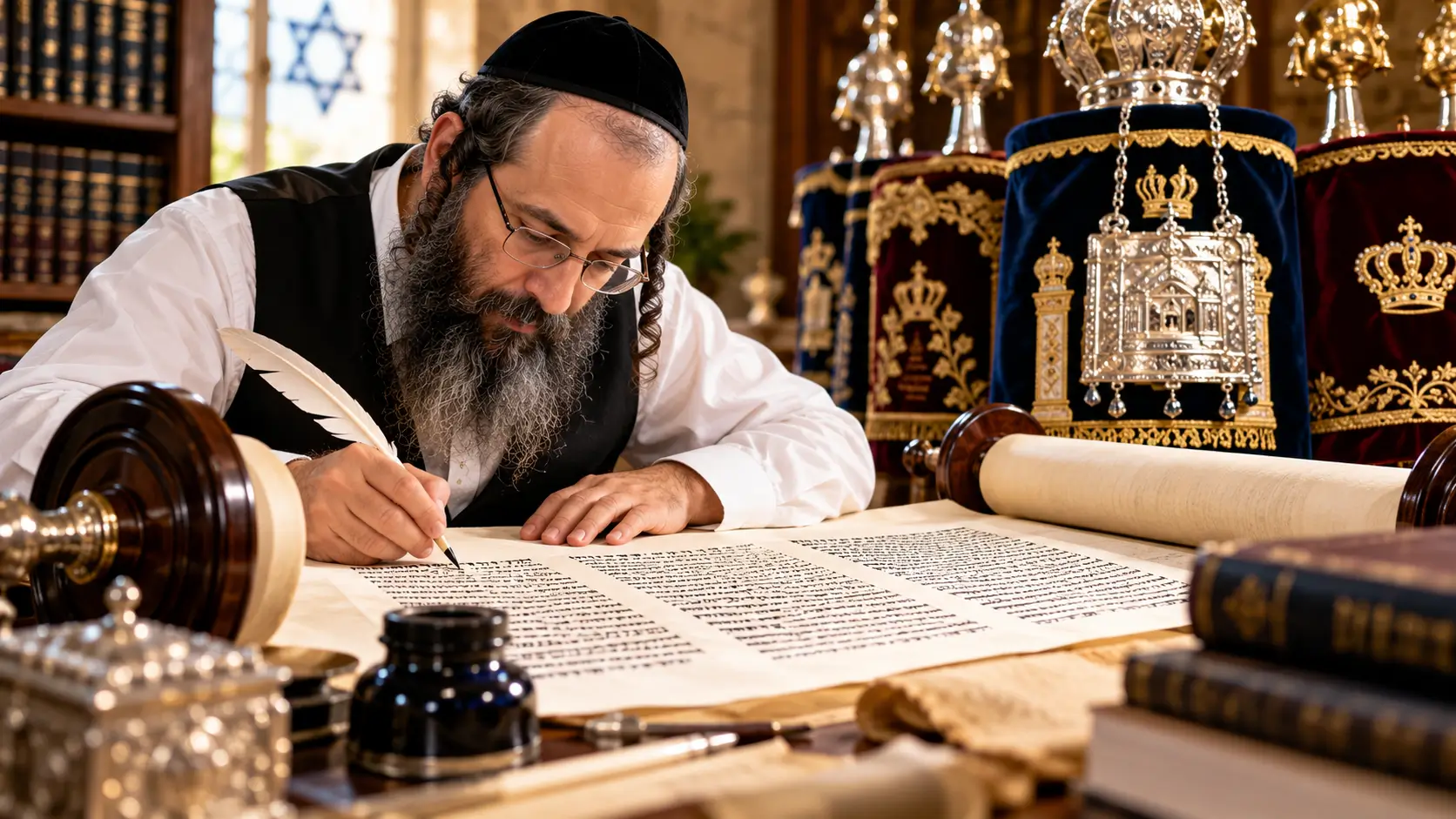
A Torah scroll is one of the most significant objects in Jewish religious life. It contains the Five Books of Moses, handwritten on parchment according to traditional scribal practices that have been passed down through generations. Beyond its physical form, a Torah scroll represents Jewish faith, learning, history, and the continuity of a living tradition.
Creating a Torah scroll requires patience, specialized knowledge, and meticulous attention to detail. From preparing the parchment to writing each letter and checking the completed scroll, every stage follows established religious requirements. Proper care and preservation are equally important, helping ensure that a Torah scroll remains suitable for its sacred purpose.
Understanding how Torah scrolls are written, checked, and preserved offers a closer look at the craftsmanship and dedication behind this ancient tradition.
The Tradition of Handwritten Torah Scrolls
Unlike an ordinary printed book, a Torah scroll is handwritten by a qualified Jewish scribe known as a Sofer STa”M. The term STa”M refers to Sefer Torah, Tefillin, and Mezuzot three categories of sacred Jewish writings that require specialized scribal expertise.
A Sofer must be familiar with the traditional Hebrew letter forms, the applicable halachic requirements, and the detailed rules governing the writing process. The work demands both technical skill and religious understanding because even small details can have significance under Jewish law.
A Torah scroll is written on specially prepared parchment using traditional materials and methods. The scribe follows an established text and writes the Hebrew letters carefully, maintaining their correct shapes, spacing, and arrangement.
The process is not simply about copying words accurately. The scroll must meet specific standards governing the letters, words, columns, and overall structure. This combination of craftsmanship and religious discipline distinguishes a Torah scroll from a conventional handwritten manuscript.
Those interested in the different traditions and craftsmanship associated with sacred scrolls can explore Torah Scrolls, including the traditional forms used in Jewish communities.
How a Sofer Writes a Torah Scroll
1. Preparing the Parchment
The writing surface is an essential part of a Torah scroll. Traditionally, the scroll is written on parchment prepared from the hide of a kosher animal according to the relevant requirements.
Parchment preparation involves specialized knowledge and careful workmanship. Its suitability, surface, and condition affect the scribe’s ability to produce clear and durable letters.
The parchment is prepared for writing and arranged into sheets that will eventually be joined to form the complete scroll. The scribe must work with a surface that supports the traditional writing process and meets the applicable requirements.
2. Preparing the Writing Materials
Traditional Torah writing uses specially prepared ink and a writing instrument suited to the work. The scribe must be able to produce precise Hebrew letters while maintaining consistency throughout the manuscript.
Ink quality and application matter because the writing must remain legible and durable. Uneven strokes, damaged letters, or deterioration can create concerns that may require professional evaluation.
The materials are selected and used with the scroll’s religious requirements in mind rather than simply for visual appearance.
3. Writing Each Hebrew Letter
The actual writing process requires exceptional concentration. The Sofer writes the Torah text by hand, following traditional letter forms and the prescribed arrangement of the text.
Each letter must be formed correctly and remain distinguishable from other letters. Spacing, alignment, and the relationship between individual letters are important considerations.
A Torah scroll contains many thousands of letters, and the scribe must maintain consistency over an extended period. The work may take months or longer, depending on the scribe’s pace and the particular project.
The finished scroll reflects not only the scribe’s handwriting but also years of training in the traditional scribal craft.
Why Checking a Torah Scroll Is So Important
Writing a Torah scroll is only one part of the process. Careful checking is essential to identifying possible errors, missing letters, extra letters, and other issues that could affect the scroll’s kosher status.
Because the text has a sacred purpose, its accuracy cannot be judged by appearance alone. A scroll may look beautifully written while still requiring closer examination of particular letters or sections.
Reviewing the Text and Letters
A qualified examiner reviews the writing for potential textual and letter-form issues. This can include checking whether letters are missing, damaged, improperly formed, or difficult to distinguish.
The examiner may also identify places where ink has deteriorated or where the parchment has sustained damage. The significance of a finding depends on the specific circumstances and the relevant halachic requirements.
Not every visible imperfection has the same consequence. Some issues may be repairable, while others require a more detailed assessment by a qualified authority.
Checking the Scroll’s Physical Condition
The parchment and stitching also deserve attention. Tears, weakened seams, moisture damage, and other physical changes can affect the scroll’s condition and may require professional care.
An inspection considers the scroll as a complete object rather than focusing exclusively on the text. Both its written content and its physical integrity are important.
For synagogues and individuals responsible for sacred scrolls, professional evaluation can help identify concerns before they become more difficult to address.
Those seeking professional guidance can learn more about [Torah Evaluations], a service relevant to assessing the condition and status of a Torah scroll.
Understanding the Role of a Qualified Sofer
Questions about whether a Torah scroll remains kosher should not be answered solely through online photographs or a general visual inspection. Some issues require detailed examination and halachic judgment.
A qualified Sofer STa”M or appropriate rabbinic authority can assess the specific concern and advise on the next steps. This is particularly important when a letter appears damaged, the parchment has been exposed to moisture, or the scroll has suffered physical damage.
Professional evaluation helps distinguish cosmetic concerns from issues that may affect the scroll’s religious suitability.
How Torah Scrolls Are Preserved
A Torah scroll may serve a community for many years when it is handled carefully and maintained appropriately. Preservation involves protecting the parchment, ink, stitching, and other components from avoidable damage.
Protecting the Scroll from Environmental Damage
Parchment is sensitive to environmental conditions. Excessive moisture can contribute to deterioration, while very dry conditions may make materials more vulnerable to damage. Heat, direct sunlight, and rapid environmental changes can also create problems.
A Torah scroll should be kept in an appropriate environment, away from direct heat sources, damp areas, and unnecessary exposure to sunlight. Storage conditions should be suitable for the scroll and its surroundings.
If a scroll becomes wet or shows signs of mold, it should not be treated with household cleaning products or improvised drying methods. Professional advice should be obtained promptly.
Using Appropriate Torah Cases and Mantles
Protective accessories help reduce exposure to dust, handling, and everyday environmental risks. Their suitability depends on the scroll’s format, the community’s tradition, and the way the scroll is stored or used.
For communities that use traditional cylindrical cases, [Sephardic Torah Cases] provide a category of protective and presentation accessories associated with Sephardic Torah traditions.
A Torah Mantle can also serve as a protective and decorative covering for a Torah scroll, particularly in communities where the scroll is stored and presented in mantle-style coverings.
The covering should fit appropriately and should not place unnecessary pressure on the scroll. Decorative components must also be handled carefully to avoid snagging, abrasion, or other accidental damage.
Handling the Scroll with Care
Handling practices are an important part of preservation. People entrusted with a Torah scroll should follow the synagogue’s established procedures and the guidance of those responsible for its care.
The scroll should not be placed on unstable surfaces or handled in ways that strain the parchment or stitching. Unnecessary opening, rolling, or movement should be avoided when there is no practical need.
If the scroll feels unusually stiff, appears damaged, or does not roll smoothly, it is better to seek professional guidance than to force it into position.
Protecting Torah Ornaments and Accessories
Torah scrolls may be accompanied by ornaments such as crowns, breastplates, and decorative finials. These objects can have religious, cultural, and artistic significance, but they also require appropriate handling.
Torah Ornaments, Torah Crowns, Torah Breastplates, and Rimonim represent different categories of traditional synagogue accessories.
When handling these items, avoid placing excessive weight on the scroll or allowing metal fittings and decorative elements to rub against the parchment. Accessories should be fitted and maintained in ways that suit the scroll’s construction and customary use.
Regular attention to the condition of both the scroll and its accessories can help reduce avoidable wear.
The Difference Between Preservation and Restoration
Preservation focuses on preventing damage and maintaining an object’s existing condition. Restoration involves addressing damage that has already occurred.
For a Torah scroll, the distinction is especially important. Routine care may include suitable storage, careful handling, and monitoring the scroll’s condition. Restoration or repair may involve issues with the writing, parchment, seams, or other components.
Not every problem should be addressed immediately through physical intervention. The appropriate response depends on the type of damage and its implications under Jewish law.
For example, a faded or damaged letter may require examination to determine whether it affects the scroll’s kosher status and whether any correction is permissible. Similarly, damaged parchment may need specialized attention rather than an ordinary repair technique.
The safest approach is to avoid attempting repairs independently. A qualified Sofer STa”M or appropriate rabbinic authority can determine what action, if any, is appropriate.
Preserving Jewish Heritage for Future Generations
Torah scrolls are more than manuscripts. They occupy a central place in Jewish worship and connect communities with generations of religious learning and practice.
Their preservation depends on the combined efforts of scribes, synagogue custodians, religious authorities, and the communities that use them. Each plays a role in respecting the scroll’s religious purpose and maintaining its physical condition.
Traditional Judaica also includes objects that support other aspects of Jewish religious life. Mezuzah Scrolls and Parchments are related to the broader tradition of sacred Jewish writing, while Tefillin Sets represent another important category of STa”M craftsmanship.
Although each item has its own requirements, the underlying principles of knowledgeable care, appropriate handling, and qualified inspection remain important.
For families, collectors, and synagogue communities, learning about these traditions can encourage greater appreciation for the skill and responsibility involved in preserving sacred objects.
When Should a Torah Scroll Be Professionally Evaluated?
There is no single inspection schedule that is appropriate for every Torah scroll. The need for evaluation depends on its condition, use, storage environment, history, and the guidance of the responsible religious authority.
Professional advice is particularly important if you notice:
- Visible damage to letters or ink.
- Tears, cracks, or other changes in the parchment.
- Loose or damaged stitching.
- Signs of moisture exposure or possible mold.
- Unusual difficulty when rolling or unrolling the scroll.
- Damage following an accidental drop or other incident.
These signs do not automatically establish that a Torah scroll is invalid. They indicate that the condition should be assessed by someone qualified to make that determination.
A professional evaluation can help identify the issue, explain its significance, and recommend an appropriate course of action.
Conclusion
Writing, checking, and preserving a Torah scroll requires a combination of traditional knowledge, precise craftsmanship, and responsible care. Every stage from preparing the parchment and forming each Hebrew letter to examining the completed manuscript and protecting it during storage contributes to maintaining the scroll’s integrity.
Proper preservation begins with understanding the materials and respecting the scroll’s religious purpose. Suitable storage, careful handling, appropriate protective accessories, and qualified professional evaluation all contribute to its long-term care.
By learning about Torah scrolls and the traditions surrounding them, individuals and communities can better appreciate the dedication behind this sacred craft and help preserve an important part of Jewish heritage for future generations.